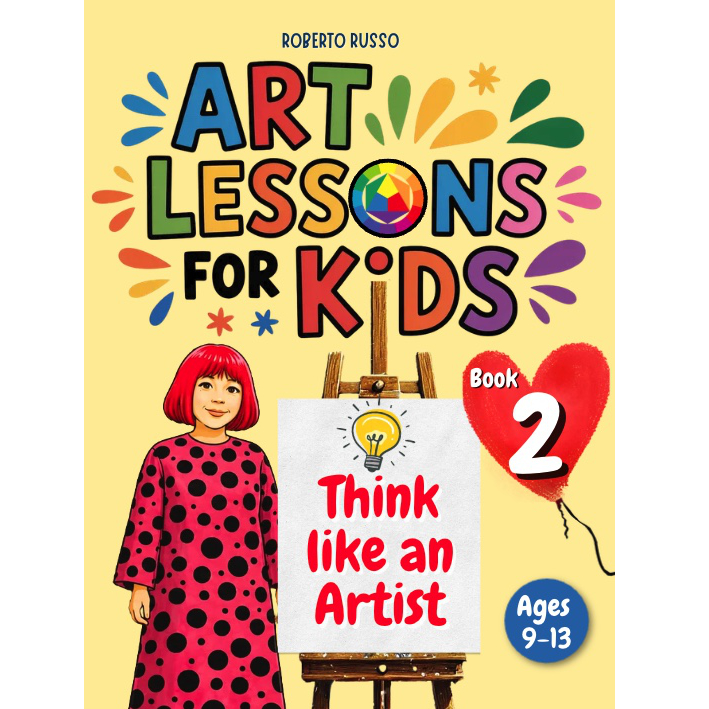
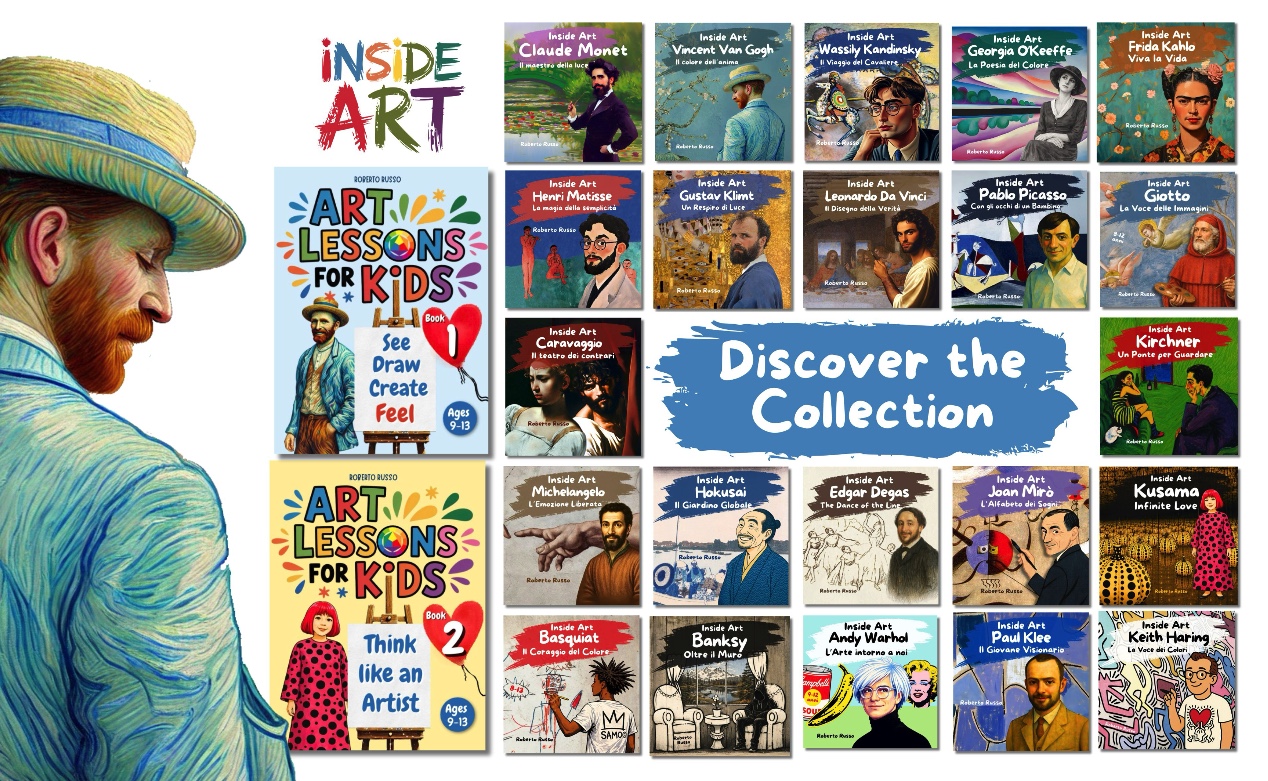








A workbook that shows how artists think.
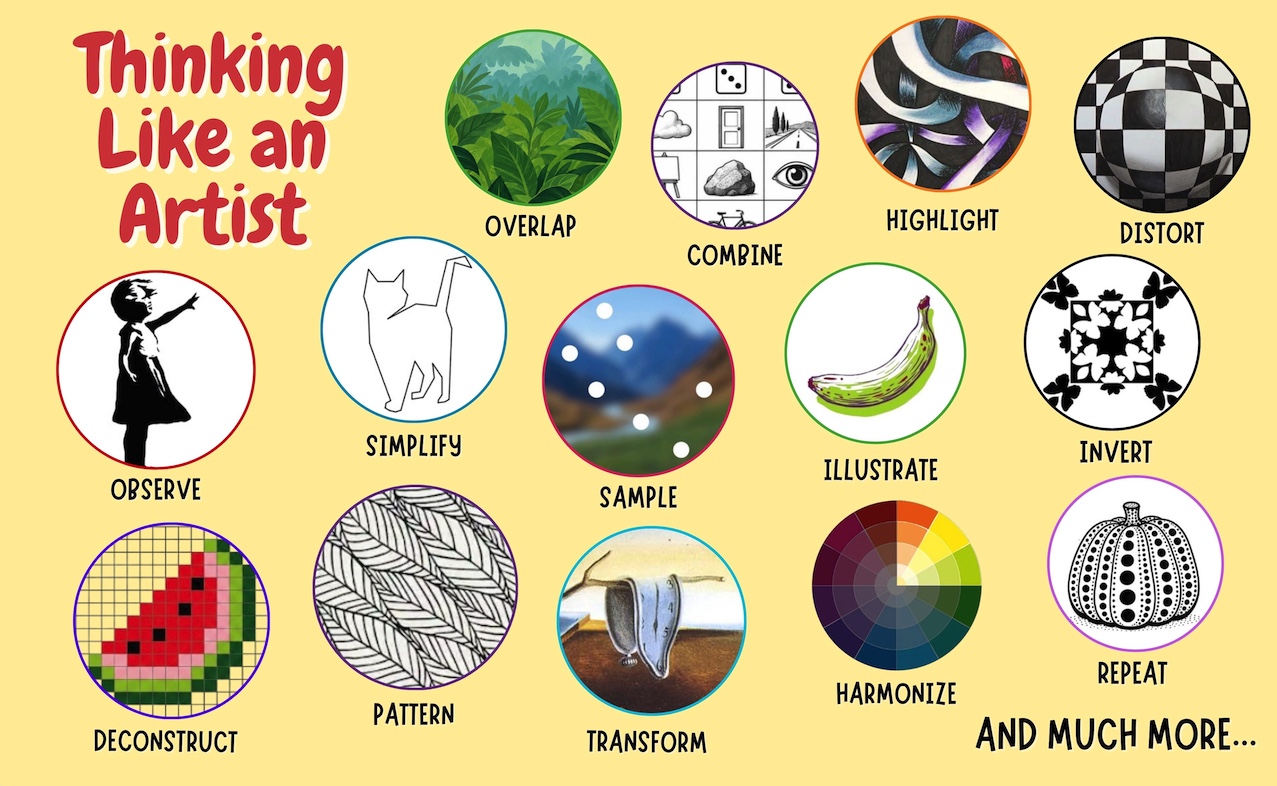
Every activity starts with a real artist and a real artwork, and ends with one move your child can use on any drawing: sampling colors, reducing lines, reversing light and dark, repeating a pattern, distorting a shape, combining two ideas into one.
What’s inside
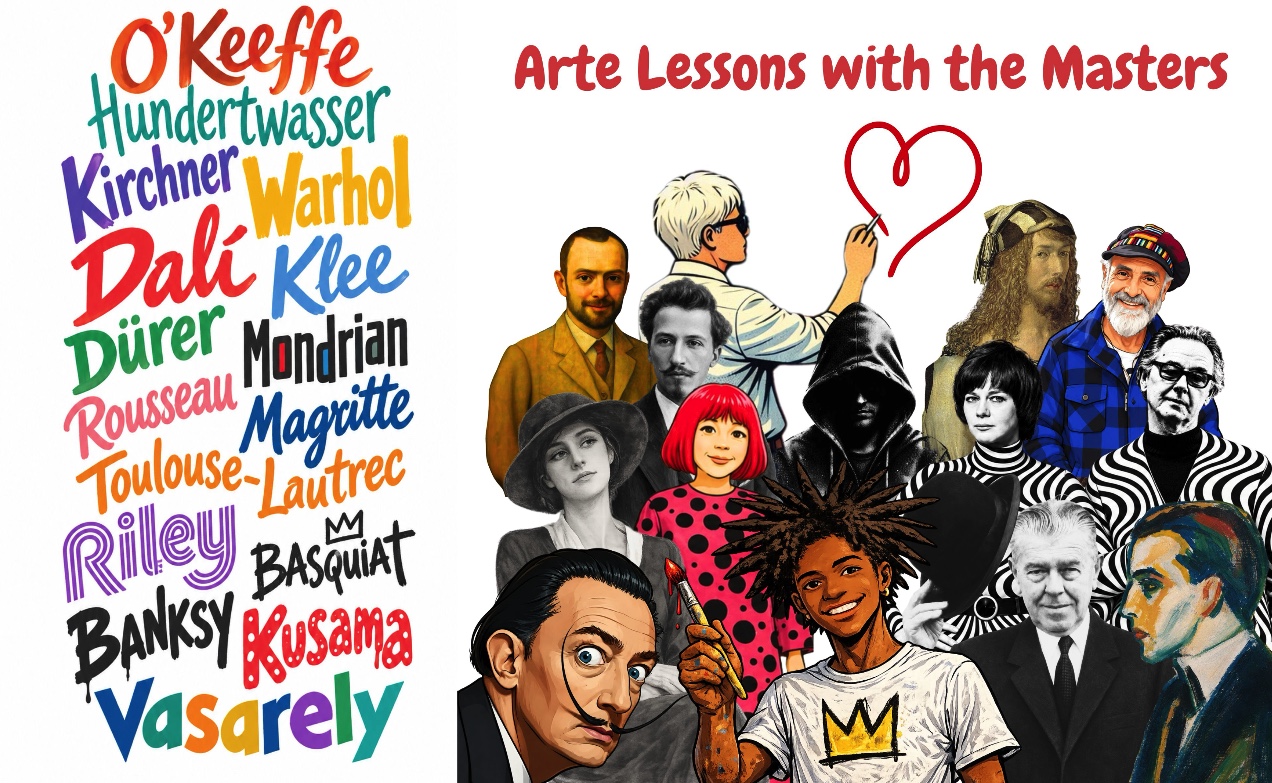
- 42 activities inspired by 16 great artists — Dürer, Toulouse-Lautrec, O’Keeffe, Kirchner, Rousseau, Warhol, Basquiat, Banksy, Kusama, Mondrian, Klee, Riley, Vasarely, Dalí, Magritte and Hundertwasser
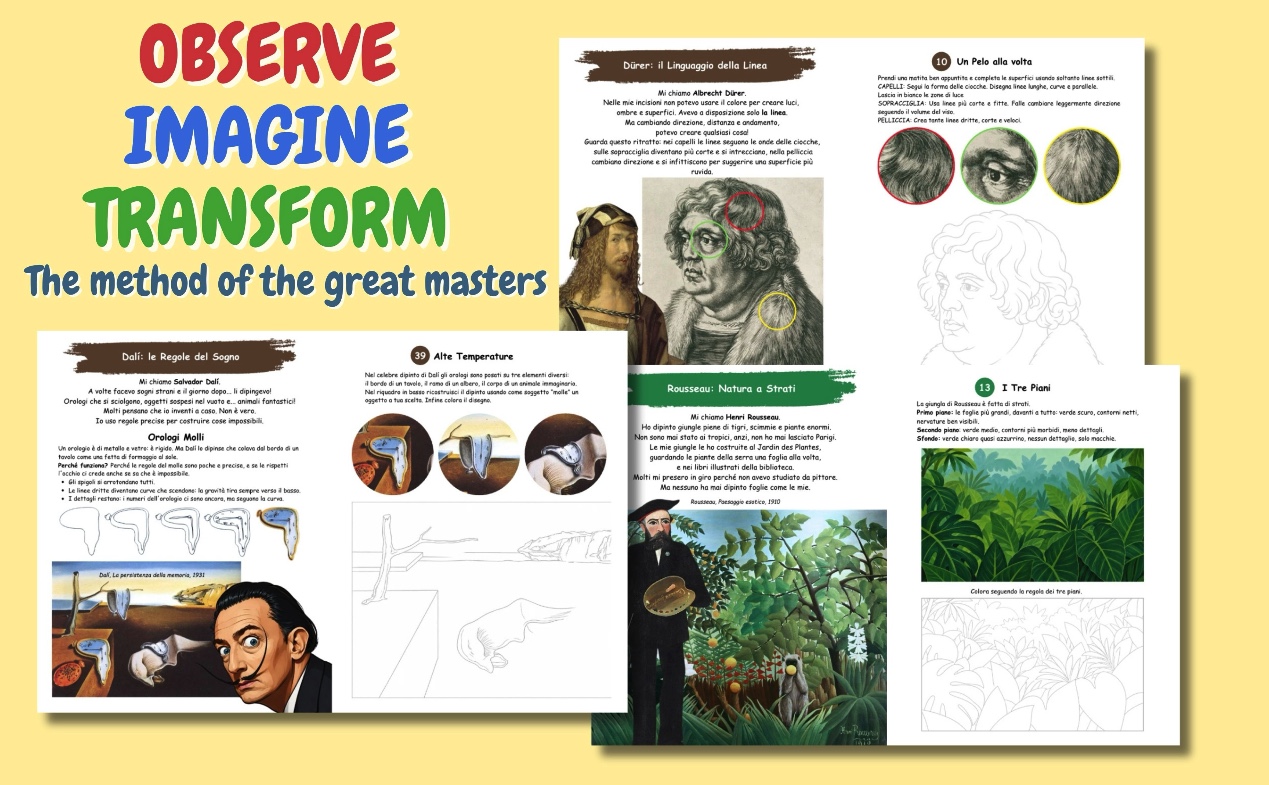
- Clear step-by-step instructions, with plenty of space to draw right on the page
- Large format with generous working areas. Printed on colored paper.
- No special materials: pencils, colored pencils, markers and a black fine-liner
What children learn.
Creativity isn’t magic — it’s a method. Every exercise hands children a procedure they can run again on their own.
- Seeing instead of copying. Reading what is actually there: the few colors that build a scene, the direction of a line, the empty space around an object.
- Reducing. Taking a shape down to its fewest lines and stopping just before it stops being alive.
- Giving every color a job. Outline, mass, shadow, light, texture. Three colors used on purpose beat twelve used at random.
- Producing ideas on demand. Combining two distant things, reversing a rule, changing the scale — the procedures behind Dalí and Magritte, made simple enough to use.
- Losing the fear of the blank page. Every exercise starts from a grid, a partial image, a first mark. There is never an empty sheet to face.
They don’t take away a folder of finished drawings. They take away a way of looking — and the confidence to begin.
Who it’s for. Ages 9-13, at home or in the classroom. Teachers will find every activity ready to run in a single lesson, with the artist’s story on the left-hand page and the workspace on the right. Written by a middle-school art teacher, from years of real classroom experience.
A natural next step from Book 1. The first volume builds the foundations of drawing — line, dot, surface, color, and light. Book 2 takes those basics further, showing how artists transform them through creative experimentations.